
Last Updated on September 3, 2026
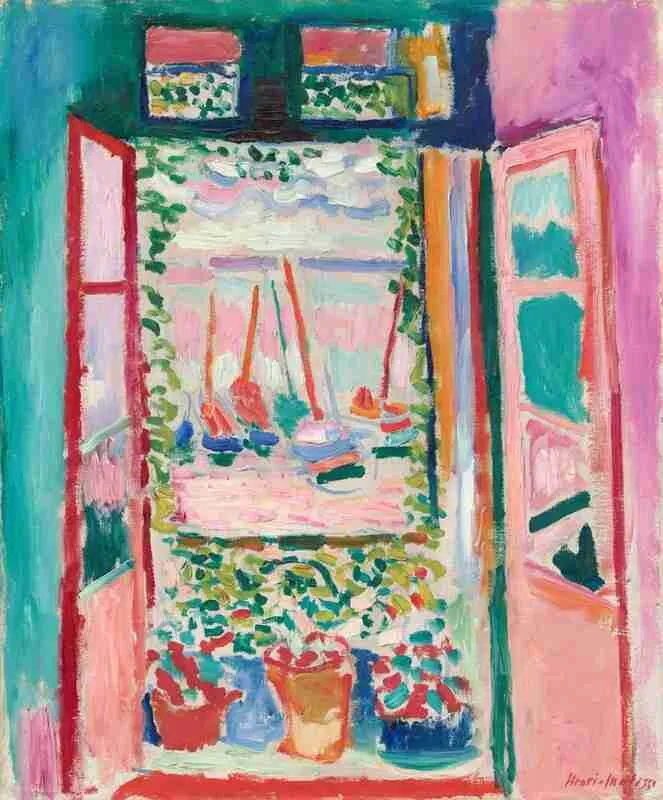
The first installment in our “Great French Icons of the 20th Century” Series
Most now see Henri Matisse as one of the people who essentially razed classical artistic and aesthetic conventions to the ground, with his ferocious commitment to vibrant color and decoration as something to take seriously. He’s seen as someone who bravely paved the way for the experimentalism of 20th century painters and artists as varied as Marc Chagall, David Hockney, Mark Rothko and Jackson Pollock.
Yet, Matisse wasn’t always venerated in this way. In fact, many of his most famous earlier works were initially met with shock and even disgust…and for decades, he was well-known but not respected by the art establishment. Far from being considered a national treasure in France, Matisse was often viewed both by earlier audiences and critics as either a trader in shock, or simply a laughing stock. His bizarrely bright colors, unrealistic compositions and focus on decoration for its own sake even offended the sensibilities of many Impressionist artists, not to mention the classical stalwarts.
See more about The French Culture Podcast here
And even in avant-garde circles, he too often felt like an outsider who couldn’t quite get on board with the groupthink. He wasn’t political enough; or he was too bourgeois, or he was too extreme in his use of color.
It would take decades for his work to earn wide acclaim in his native country, and, on a global level, for him to be considered one of the West’s pioneering modern artists. The question I’ll have a crack at answering today is this one: how did he use the irritating grain of public outrage, and the inspiration of new places, to produce such original work? And how did he go from copying Dutch and European masters in a stuffy Parisian art academy to inventing radical new ways of “feeling through” color and form, as he so often put it?
Watch this episode on YouTube
I hope you’ll stay with us as we explore one of the crucial periods in Matisse’s life and art, and learn how it not only transformed his own artistic practices, but also modern art writ large. Along the way, we’ll also learn about his personality quirks, including a lifelong battle with insomnia and health problems, and an affection for collecting pretty rugs, butterflies and live birds. Then we’ll explore his crucial relationships with his wife Amelie and his daughter Marguerite, with Gertrude Stein and her family, with Pablo Picasso, and other luminaries of his period.
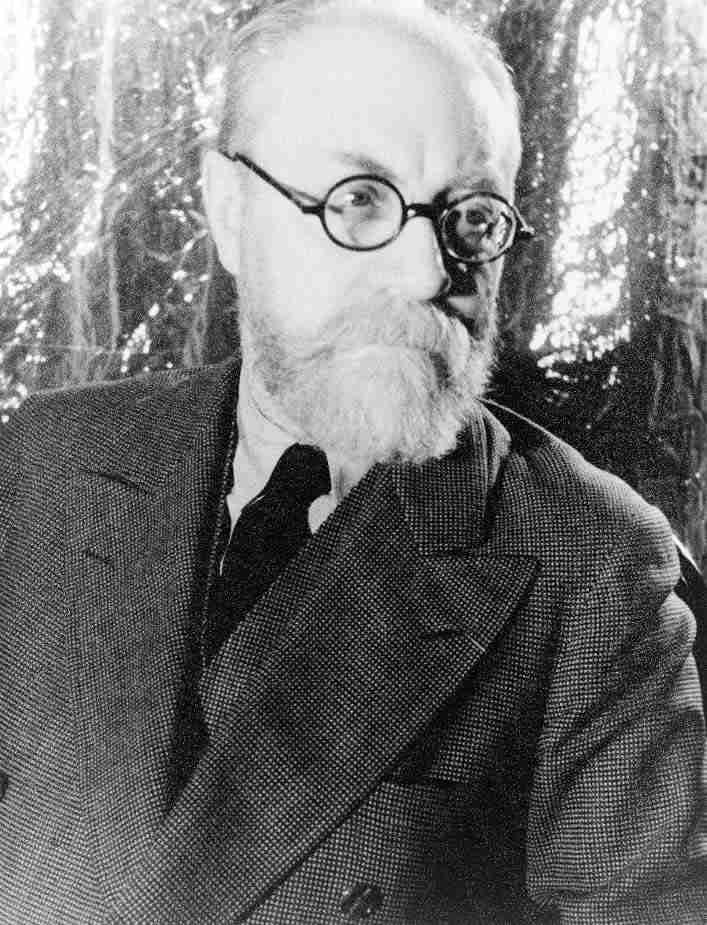
Show notes
This episode was conceived, written, narrated and edited by Courtney Traub. It was produced by Brendan Whalen, who contributed additional research, script editing and voiceovers. Additional audio editing and sound design was by Engin Hassan of Edit Fade Warp. Artwork for the Paris Unlocked Podcast was created by Mateeya.
If you liked this episode, please follow The French Culture Podcast, and share it as widely as you can.
Follow & listen on Spotify, Rss.com, Apple Music, or Substack
And as I mention at the beginning of the episode, you can also lend your precious support to both the French Culture Podcast and to our sister website and newsletter, Paris Unlocked, by buying us a coffee– or even better, becoming a “Donor Subscriber” on Substack. In addition to bonus episodes and early-release materials from the podcast, you’ll get unlimited access to a large archive of Paris and France-related news stories, reviews, audio stories, essays and travel tips, as well as personalized travel advice from me.

Translations of original French quotes in this episode are all by Courtney Traub. All images displayed in the show notes are out of copyright and in the public domain.
Music credits (all music clips are in the public domain)
Intro and outro: Music by Trygve Larsen from Pixabay (“Erik Satie’s Gnossienne 1 – Classical Remix Piano and Sax”)
Music in order of use throughout episode:
- Music by Samuel F. Johanns from Pixabay (“Erik Satie, Gymnopédie No. 1” )
- Music by Trygve Larsen from Pixabay (Songs From the 18th Century -Belle O Brien (1895)
- Music by Victory Day from Pixabay (La Belle Dame Sans Merci/Violin Duet)
- Sound Effect by freesound_community from Pixabay (marché
- “Sardana” Kevin MacLeod (incompetech.com) Licensed under Creative Commons: By Attribution 4.0 License (http://creativecommons.org/licenses/by/4.0/)
- Music by Trygve Larsen from Pixabay (Classical piano by Debussy: Suite Bergamasque 1905-Menuet
Visuals: Artwork for the Paris Unlocked Podcast was created by Mateeya.
Sources for this episode
For this episode, we consulted a variety of print and online primary sources, including books, podcasts, newspaper articles, blogs and unpublished archival documents. They are presented in relative order of importance and/or order in which their information appears in the episode, rather than in alphabetical order. Sources are both in English and French; where available, I have also linked to the English-language version of the source.
- Hilary Spurling, Matisse: The Life. Penguin Books, 2009.
- Pierre Courthilon. Chatting With Henri Matisse: The Lost 1941 Interview. Edited by Serge Guilbault. Getty Institute, 2013.
- France Culture, “Matisse: Artiste demiurge” {podcast in French}. Episode 1, “Matisse et le bonheur de vivre”. Available at: https://www.radiofrance.fr/franceculture/podcasts/la-compagnie-des-oeuvres/matisse-et-le-bonheur-de-vivre-4829837
- France Culture, “Matisse: Artiste demiurge” {podcast in French}. Episode 2: Matisse à l’oeuvre”. Available at: https://www.radiofrance.fr/franceculture/podcasts/la-compagnie-des-oeuvres/matisse-a-l-oeuvre-7767927
- Modern Art Notes Podcast. “Matisse on Matisse” (interview with Serge Guilbault about the 1941 interview.) Available at: https://www.getty.edu/research/exhibitions_events/events/chatting_matisse.html
- Encyclopedia Britannica. “Henri Matisse. French artist”. Available at: https://www.britannica.com/biography/Henri-Matisse.
- Musée Matisse. “Henri Matisse and the Chapelle du Rosaire”. Available at: https://www.musee-matisse-nice.org/en/the-artist/matisse-and-the-rosary-chapel/
- Patrick Amine. “Henri Matisse: Comme un Roman”. Exporevue, November 2020. Available at: https://www.exporevue.com/magazine/fr/index_matisse.html
- Clara T. McChesn, “A Talk With Matisse, Leader of Post-Impressionists” The New York Times (archive), 9 March 1913. Available at: “https://www.nytimes.com/1913/03/09/archives/a-talk-with-matisse-leader-of-postimpressionists.html?searchResultPosition=67
- Paul Cezanne.org. “Three Bathers”. Available at: https://www.paulcezanne.org/three-bathers.jsp.
- Henrimatisse.org. “Paul Cezanne’s Impact on Henri Matisse”. Available at: “https://www.henrimatisse.org/matisse-and-cezanne.jsp.
- Artchive. “Arcueil (1899) by Henri Matisse”. Available at: https://www.artchive.com/artwork/arcueil-henri-matisse-1899/.
- Phillipe Dagen, “ Marguerite Matisse, a model daughter essential to her father”, Le Monde (English version), 8 April 2025. Available at: https://www.lemonde.fr/en/culture/article/2025/04/08/marguerite-matisse-a-model-daughter-essential-to-her-father_6739955_30.html.
- Hilarie M. Sheets. “The Forgotten Dealer Who Discovered Matisse and Picasso”, The New York Times, 29 September 2024. Available at: https://www.nytimes.com/2024/09/29/arts/design/berthe-weill-dealer-paris-grey-art-museum.html.
- Virginie Larouse, “La religion, l’idéologie, la science… : quand les maladies du « croire » mettent la démocratie en danger”. Le Monde, 11 June 2021. Available at: https://www.lemonde.fr/idees/article/2021/06/11/la-religion-l-ideologie-la-science-quand-les-maladies-du-croire-mettent-la-democratie-en-danger_6083701_3232.html.
- Berthe Weill, “Pow! Right in the Eye! Thirty Years Behind the Scenes of Modern French Painting”. Edited by Lynn Gumpert. Translated by William Rodarmor. Abakanowicz Arts and Culture Collection.
- The Museum of Modern Art. Press Release, November 14, 1963 (announcing the museum’s acquisition of “Dance” by Henri Matisse, from Nelson Rockefeller). Available at: https://www.moma.org/momaorg/shared/pdfs/docs/press_archives/3203/releases/MOMA_1963_0115_111.pdf
- Christie’s, “André Derain (1880-1954)”, ‘Matisse et Terrus’. Available at: https://www.christies.com/en/lot/lot-6476170
- Richard Cavendish, “The Fauves at the Salon d’Automne”. History Today, Volume 55, Issue 10, October 2005. Available at: https://www.historytoday.com/archive/fauves-salon-d%E2%80%99automne
- The New York Times (archive). No byline given. “SALON GIVEN OVER TO FREAK PAINTINGS; Ridicule Aroused by Many of the Modern Works in the Fall Exhibition. IMPRESSIONISTS OUTDONE Galleries Dominated by Works of Matiese and Van Dongen and Their Followers”, 11 October 1908. Available at: https://www.nytimes.com/1908/10/11/archives/salon-given-over-to-freak-paintings-ridicule-aroused-by-many-of-the.html?searchResultPosition=62
- Roberta Smith, “Matisse and Derain: The Audacious ‘Wild Beasts’ of Fauvism in a Radiant Show”. The New York Times, 9 November 2023. Available at: https://www.nytimes.com/2023/11/09/arts/design/matisse-derain-fauvism-metropolitan-museum.html
- Montmartre Artists’ Studios. “The Bateau Lavoir Montmartre Where Picasso Was ‘Born’”. Available at: https://montmartrefootsteps.com/picasso-bateau-lavoir/
- Janet Flanner, “King of the Wild Beasts- 1”. The New Yorker, 15 December 1951. Available at: https://www.newyorker.com/magazine/1951/12/22/henri-matisse-profile-king-of-the-wild-beasts-i
- Beverley Whitney Kean, “All the empty palaces : the great merchant patrons of modern art in pre-Revolutionary Russia”. Internet Archive. Available at: https://archive.org/details/allemptypalacesg0000kean/
- Stanley Steinberg, “Sarah Stein: The Woman Who Brought Matisse to San Francisco A Memoir: Learning about Art and the Art of Psychoanalysis”, American Imago, Vol. 68, No. 3 (Fall 2011), pp. 517-542. Available at: https://www.jstor.org/stable/26305237
- Haber’s Art Reviews. “Gertrude and Leo Stein as Collectors”. Available at: https://www.haberarts.com/glmstein.htm
- Annette Rosenshine, “”Life’s Not a Paragraph” (unpublished memoir, typescript carbon). Gift of Annette Rosenshine, 1968. Beinecke Rare Book and Manuscript Library, Yale Library Digital Collections. Available at: https://collections.library.yale.edu/catalog/17213027
- Gertrude Stein, “The Autobiography of Alice B. Toklas”. Project Gutenberg Australia ( uploaded 2015). First published in 1933. Available at: https://gutenberg.net.au/ebooks06/0608711h.html
- James R. Mellow, “The Stein Salon Was the First Museum of Modern Art”. The New York Times (archive), 1 December 1968. Available at: https://archive.nytimes.com/www.nytimes.com/books/98/05/03/specials/stein-salon.html?scp=71&sq=catholic%20museum&st=cse
- Cath Pound, “The Shocking Memoir of the Lost Generation”, BBC Culture, 27 July 2021. Available at: https://archive.nytimes.com/www.nytimes.com/books/98/05/03/specials/stein-salon.html?scp=71&sq=catholic%20museum&st=cse
Further reading:
Recommended reading on Matisse & Picasso
- The Met. “The Steins Collect”: Matisse, Picasso & The Parisian Avant-Garde. (documentary, 2012). Available at: https://www.youtube.com/watch?v=dmR-JjBqiLg
- Baldassari, Anne, Cowling, Elizabeth, Elderfield, John, Golding, John, et al. Matisse Picasso. Tate Publishing, 2002.
- Flam, Jack. Matisse and Picasso. The Story of Their Rivalry and Friendship. Basic Books, 2004.
Matisse and his Children
- Wizevich, Eli. “Meet Marguerite, Henri Matisse’s Eldest Daughter—and One of His Most Influential Models”. Smithsonian Mag, 2 June 2025. Available at: https://www.smithsonianmag.com/smart-news/meet-marguerite-henri-matisses-eldest-daughter-and-one-of-his-most-influential-models-180986684/
- Monod-Fontaine, Isabelle. Marguerite Matisse: La jeune fille au ruban. (in French). Grasset, 2025.
- Russell, John. Matisse: Father and Son. Harry N. Abrams, Inc, 1999.
Matisse and the World Wars
- Gorham, Christopher C. Matisse at War: Art and Resistance in Nazi Occupied France. Citadel Press, 2025.
- Lifson, Edward. “A Wartime Matisse Full of Pain and Beauty”. Weekend Edition Sunday, NPR, 13 June 2010. Available at: https://www.npr.org/2010/06/13/127745865/a-wartime-matisse-full-of-pain-and-beauty

The French Culture Podcast: Season 1, Episode 3 – Edith Piaf, Part 1
The French Culture Podcast: Season 1, Episode 4 – Edith Piaf, Part 2

The French Culture Podcast: Season 1, Episode 5 – Josephine Baker

Seeking Josephine Baker in Paris: A Bit of History & Places to Visit

5 French Paintings that Depict Paris (& Transport You There)

Courtney Traub is the Founder and Editor of Paris Unlocked. She’s a longtime Paris resident who now divides her time (as well as she can manage) between the French capital and Norwich, UK. Co-author of the 2012 Michelin Green Guide to Northern France & the Paris Region, she has been interviewed as an expert on Paris and France by the BBC, Australian Broadcasting Corporation, Le Figaro, Matador Network and other publications. Courtney has also written and reported stories for media outlets including Radio France Internationale, The Christian Science Monitor, Women’s Wear Daily and The Associated Press. In addition to going down various rabbit holes of curiosity when it comes to French culture, history, food and art, Courtney is a scholar of literature and cultural history whose essays and reviews have appeared in various forums.
