
Last Updated on September 17, 2026

Most of the time, dining out is about the food, with ambience coming a distant second. But in a place like Paris, rich with hundreds of years of history (including culinary), there’s something to be said for enjoying a meal or two within the walls of historic restaurants– places that, whether for their architecture, their culinary history or their past importance in broader Parisian history– let you taste another time.
The restaurants we’ve picked out, presented more or less in chronological order below, are excellent spots for lunch or dinner when you want to soak in a bit of history and/or impressive architecture. There’s something for most budgets, too. Just be aware that, with a couple of exceptions, these places don’t necessary offer the most interesting and promising new cuisine. You’re going mostly for the history, and the memorable vibes.
Le Caveau des Oubliettes: Cheese, Wine & Jazz in a Medieval Dungeon
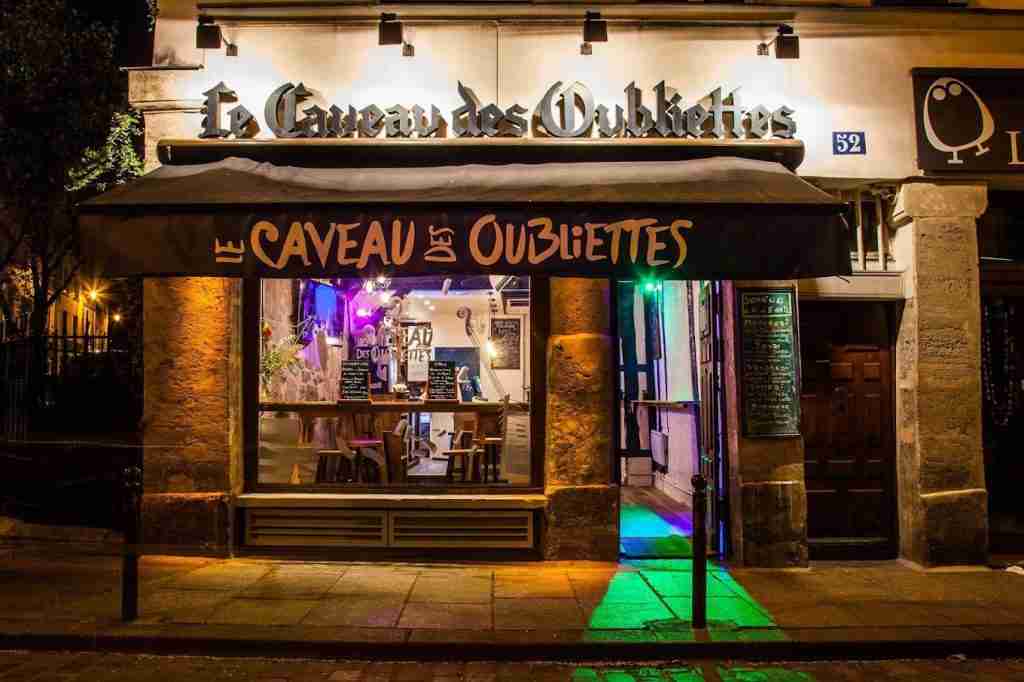
Let’s start with a place where you can hang out in part of the underground remnants of medieval Paris. This cheerful Latin Quarter cocktail bar and jazz club doesn’t technically have a restaurant, but it does serve cheese and charcuterie platters alongside hot finger foods and salad items, so if you’d rather skip dinner out at a more formal place and nosh on some delicious French cheeses and wines as you take in live jazz or blues, this could be your speed.
{Related: A Self-Guided Walking Tour of Medieval Paris}
The Caveau des Oubliettes is set within the walls of a 12th-century medieval dungeon that was part of the Petit Chatelet prison, created by King Philippe Auguste and since destroyed. Strangely and interestingly, the now-cheerful bar and venue displays several instruments of torture– and even a small guillotine– behind glass, hinting at its potentially sinister past as a prison.
Entry is free, but arrive early to get a table as the place is tiny. Patrons are expected to purchase at least one or two drinks if you’re there to see live music.
- Address: 52 Rue Galande, 75005 (5th arrondissement)
- Metro: Cluny la Sorbonne
- Visit the official website and see live music program and menus (in French)
- More at TripAdvisor (in English)
La Tour d’Argent: A Michelin-Starred Table Opened in 1582
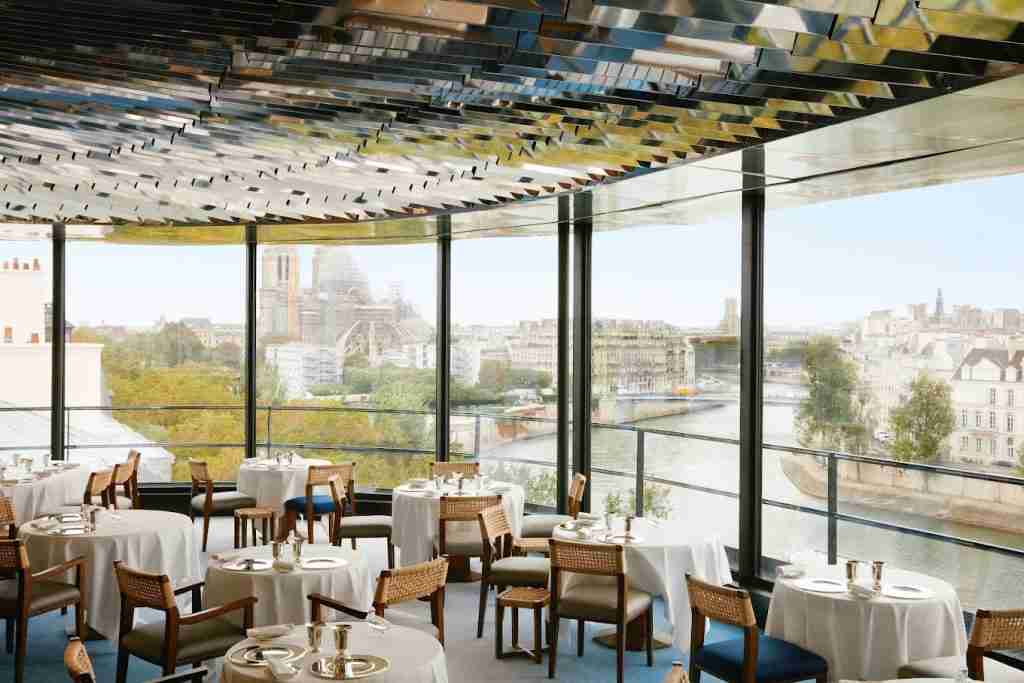
For the dedicated gastronomes among you, a meal at this legendary restaurant overlooking the Seine is probably in order. It’s also an excellent spot for a special occasion like an anniversary or birthday, but since La Tour d’Argent and its executive chef Yannick Franques hold a Michelin star, this one is a definite splurge.
Travel tip: Lunch menus are much less expensive than dinner menus or a la carte options, so consider booking this table for lunch. If your budget doesn’t allow for a full meal, try a drink at the onsite bar.
First opened in 1582, it’s one of the oldest restaurants in the city, and in its some 400 years of operation it’s gained renown as one of the gatekeepers (and taste-makers) of French cuisine. It’s not easy to maintain a Michelin star, as many of you know, but the strength of La Tour d’Argent is its ability to constantly adapt and re-invent itself.
This is reflected in the resolutely contemporary interior design and architectural design of the current premises, which offer stunning panoramic views over the Seine and numerous Parisian landmarks, including Notre-Dame Cathedral.
{These Parisian Museums Offer Stunning Panoramic Views}
But the history here is rich, authentic and deep. First opened in 1582 as l’Hostellerie de la Tour d’Argent during the reign of King Henri III, the “auberge” (inn) was designed to lodge and accommodate royals and aristocrats; it stood just beside the (since-destroyed) Chateau de la Tournelle, from which it draws its name.
In the 16th century, the Tour d’Argent is the first place in France to introduce the fork to the table, a then-strange utensil hailing from Italy. King Henri IV was a regular, and enthusiastic, patron of the exclusive restaurant at the inn, assigning it its own coat of arms. It remained prominent through the reign of Louis XIV.
The famed inn was closed during France’s long period of revolutionary tumult in the 18th and early 19th century, re-opening in 1830 as a new restaurant devoted to high French gastronomy. It continued to attract wealthy and royal patrons, including a gaggle of Russian czars.
It was in 1911 that the Terrail family took over the storied Tour d’Argent– and have continued to own it for three generations, maintaining its reputation throughout the decades.
- Address: 15 Quai de la Tournelle, 75005 (5th arrondissement)
- Tel: +33 (0) 1 43 54 23 31
- Metro: Sully-Morland or Jussieu
- Visit the official website and book (in English)
La Petite Chaise: Claiming to be the Oldest Continuously-Open Restaurant in Paris
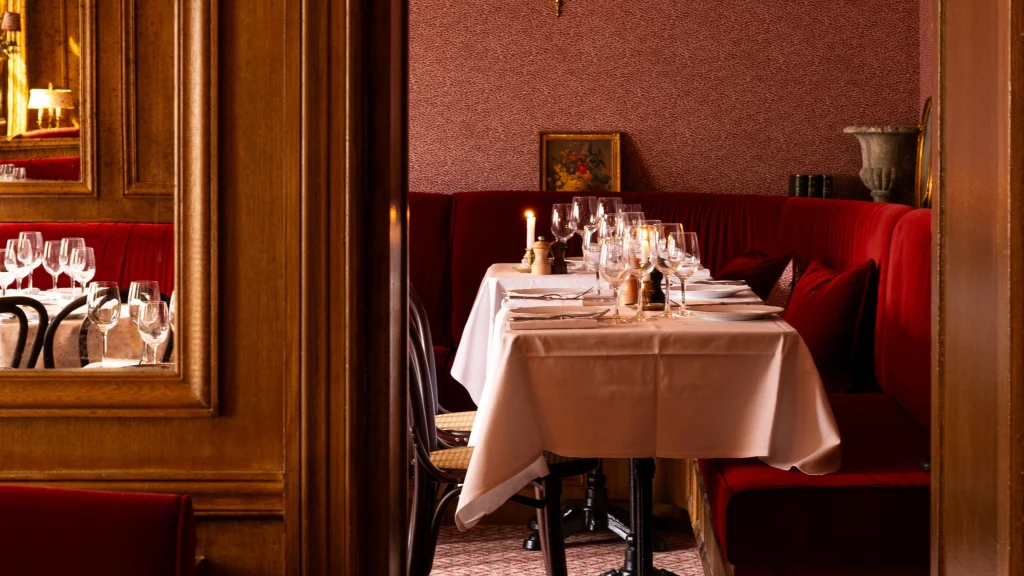
Claiming to be the oldest (continuously running) restaurant in the capital, this very-traditional French table in the Grenelle district of Western Paris first opened its doors as an inn and kitchen in 1680, during the reign of King Louis XIV. Or in 1700– depending on conflicting accounts from the restaurant itself.
Never mind. The place is old, especially considering that it wasn’t until the 19th century that the modern restaurant– as an establishment for all citizens– came into vogue. But in its early years, according to historical notes found on its official website, La Petite Chaise catered almost exclusively to royals, aristocrats and occasionally their employees– including the playright Jean Racine, who, before earning his literary chops, was secretary to the Duchesss of Chevreuse. Royals often organized “soupers” at the restaurant– suppers that were in reality lavish private feasts.
{History of the Parisian Bouillon, From Aristocratic to Democratic Table}
During the 19th century, Brillat-Savarin, widely seen as the father of modern French cuisine, praised the cooking at the restaurant in his foundational cookbook, Physiologie du goût (The Physiology of Taste).
And noteworthy French writers and philosophers including Chateaubriand, Jean-Paul Sartre and Colette reportedly dined regularly here over the decades that followed.
The fare, solidly traditional-French, is rated highly by travelers on sites such as TripAdvisor and The Fork. Dishes like French onion soup, Magret of duck with orange, celery remoulade, sole meunière, tarte tatin and chocolate mousse are all staples on the a la carte menu. Meanwhile, the decor is blandly 18th-century style and not especially memorable, but it’s still arguably worthwhile to come see for yourself whether this table deserves to have survived throughout the centuries.
- Address: 36 Rue de Grenelle, 75007 (7th arrondissement)
- Tel: +33 (0) 1 42 22 13 35
- Metro: Rue du Bac
- Visit the official website and book (in English)
Le Grand Véfour: 18th-Century Grandeur Galore
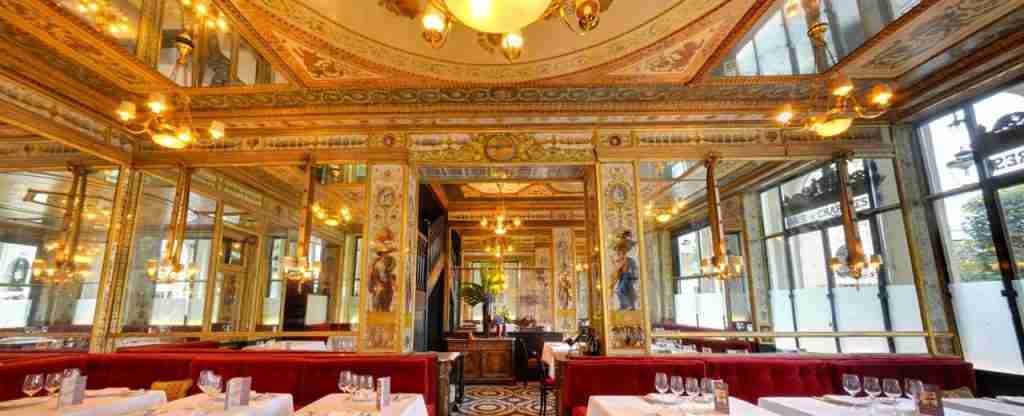
Yet another restaurant claiming to be Paris’ oldest, this might be one of its very finest. The two-Michelin-starred Grand Véfour opened sometime between 1784-1785, under the reign of the ill-fated King Louis XVI and just a few years before the French Revolution of 1789. It began as the Café de Chartres, meant to accommodate wealthy and aristocratic audiences from a nearby theatre. It soon gained a reputation as a place for a new, wildly innovative and always-decadent French brand of gastronomy that was gaining ground in elite Paris, influenced largely by Italian royal cooking but adding its own distinctive elements.
During the revolutionary period, the Cafe de Chartres was a hotbed for thinkers, and even agitators, of the time, even hosting a revolutionary faction called the Ultras under its roof. It then fell into a period of decline.
It was in the early 19th century that a young Parisian named Jean Véfour took over the premises and made it into the restaurant that today holds such a prized place in the Parisian gastronomic landscape.
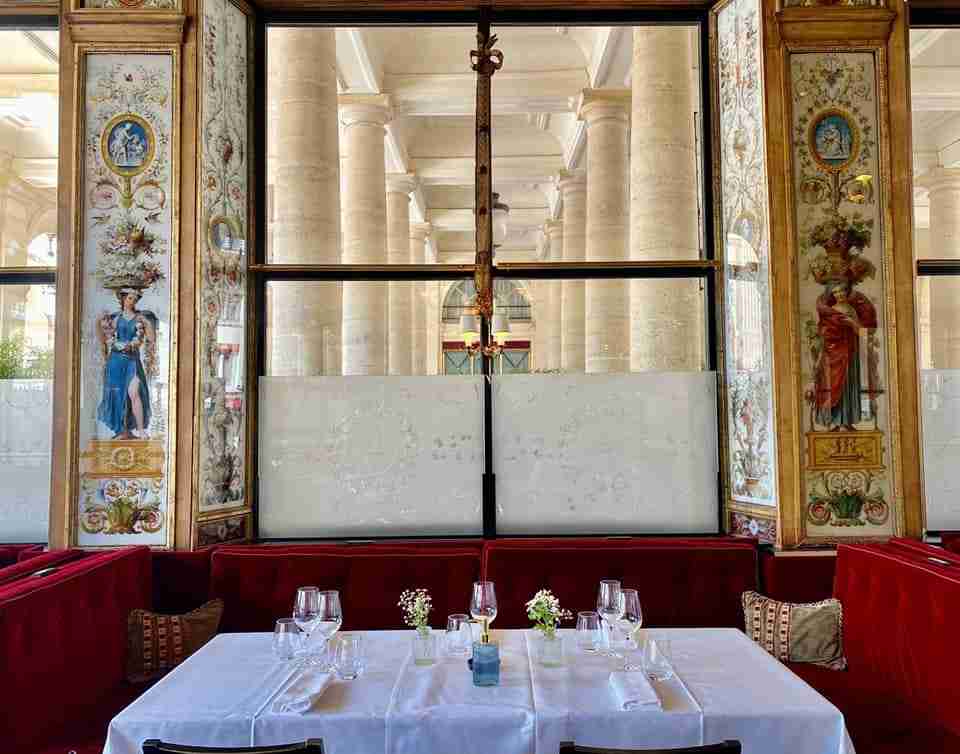
Today, acclaimed chef Guy Martin presides over a kitchen reputed for its contemporary elegance grounded in solid French tradition. But the decadence of the period it hails from is everywhere apparent in the meticulously preserved restaurant, which occupies the “Beaujolais” wing of the opulent Palais Royal and conserves countless lavish details true to the Louis XVI style, including neoclassical-style paintings and frescoes, wall and wood carvings.
For a full history of Le Grand Véfour, see this page (in English).
- Address: 17 Rue de Beaujolais, 75001 (1st arrondissement)
- Tel: +33 (0) 1 42 96 56 27
- Metro: Palais Royal- Musée du Louvre or Bourse
- Visit the official website and book (in English)
Lapérouse: A Romantic 18th Century restaurant With a Seamy History
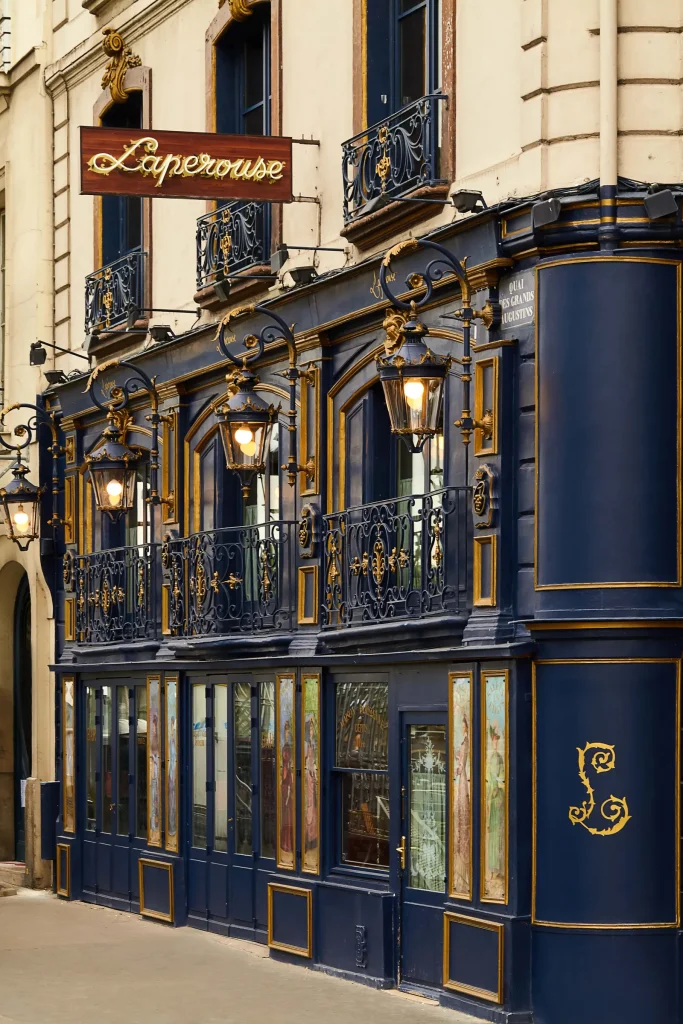
First opened in 1766 as a wine merchant, Lapérouse has long harbored a reputation for seaminess and sensuality– and for good reason. It’s at times been lauded as a place of high French gastronomy, once helmed by Auguste Escoffier, one of the people credited with inventing modern Gallic cuisine. It also earned three Michelin stars in 1951 (only to lose them all later).
Lapérouse has a rich literary history, with writers including Colette, Proust, Flaubert and Baudelaire known to have lounged around with friends in its many intimate “salons”.
But these little rooms, recently revamped with velvety divans, chandeliers, Venetian mirrors and leather-embossed walls to authentically reflect some of their original 18th-century decor, are rumored to have been favorite spots for illicit trysts among the wealthy, the powerful and the famous. There have at times been secret tunnels connecting the French Senate to the restaurant, supposedly, but I haven’t been able to find any credible sources confirming this.
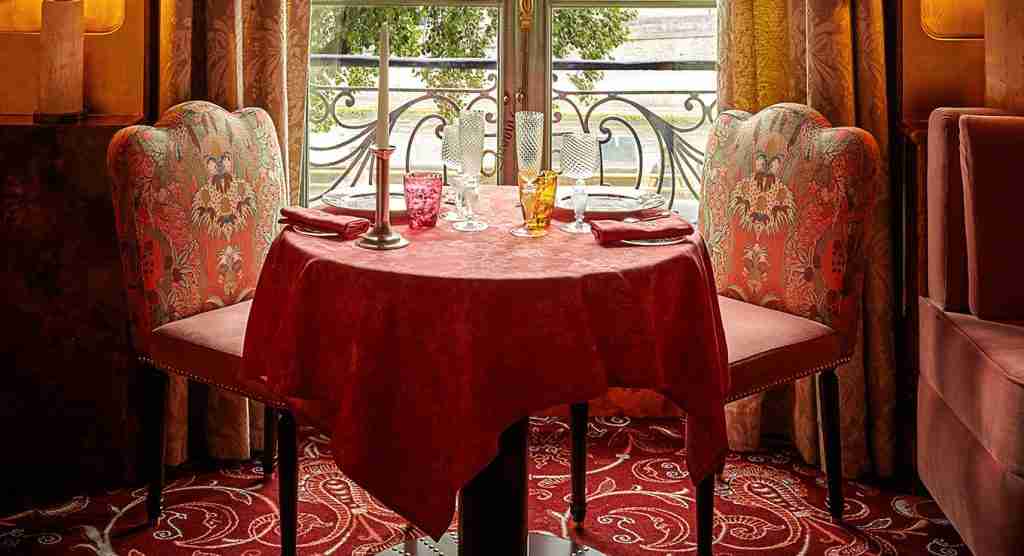
It’s got all the allure and gawdy taste(lessness) of an opium den for well-to-do Romantic poets with too much money to spend, so you can’t really beat Lapérouse if it’s a very French brand of decadence you’re after. It’s mostly all decor and soft lights that are key to its seductive power, though. Don’t go expecting extraordinary food, though the revamped menu from chef Jean-Pierre Vigato (formerly of Apicus) is reputedly more than solid.
- Address: 51 Quai des Grands Augustin, 75006 (6th arrondissement)
- Tel: +33 (0) 1 43 26 68 04
- Metro: St-Michel or Mabillon
- Visit the official website and book (in English)
Beefbar & Its Stunning Art-Nouveau Atrium

I bet you were wondering when I’d get to talking about restaurants that beautifully exemplify art-nouveau architecture, right? Beefbar Marbeuf, part of the sprawling luxe-meat restaurant chain stretching from Monte Carlo to Tokyo, is situated in one of the most stunning art-nouveau dining rooms remaining in Paris.
{Related: Most Beautiful Restaurants in Paris}
While vegetarians and vegans will likely want to abstain from Beefbar’s (earnest) menu of steak and meat-centric fare, the stunning main dining room is well worth a peek. It occupies the atrium of a former restaurant called La Fermette Marbeuf, whose light-filled glass rooftop, lamps, mirrors and art-nouveau paintings were painstakingly restored by the architects Humbert & Poyet. The atrium, created in 1898, was registered as a National Heritage monument in the early 1980s, and it remains an architectural jewel from the late 19th/early 20th century period.
The restaurant, just a few feet from the prestigious Avenue des Champs-Elysées, is probably best appreciated at lunch or for early dinner in summer, when the light streams in through the glass rooftop.
- Address: 5 Rue Marbeuf, 75008 (8th arrondissement)
- Tel: +33 (0)1 44 31 40 00
- Metro: Georges V
- Visit the official website and book (in English)
You can see more examples of beautiful art-nouveau and art-deco restaurants in our guide to the best Parisian “bouillons”, including the legendary Chartier (full review). All of these are worth booking for lunch or dinner– and some are quite inexpensive.

Also see our piece on the rebirth of La Samaritaine department store, which houses a lovely restaurant under one of its painstakingly restored art-nouveau coupolas.
La Closerie des Lilas: For 19th and 20th-century Literary Nostalgia

No guide to historic Parisian tables and restaurants would be worth its salt without mention of La Closerie des Lilas, a humble 19th-century brasserie turned literary legend thanks to its appearance in books such as Ernest Hemingway’s A Moveable Feast.
Opened in 1847 as a neighborhood brasserie in Montparnasse— before the neighborhood’s golden period as a hotbed for artists and writers in the early 20th century– La Closerie de Lilas is most associated with the “Lost Generation” of American writers, artists and patrons who flocked to Paris between the two world wars, including the aforementioned Hemingway, Gertrude Stein, F. Scott Fitzgerald, Sylvia Beach and Ezra Pound.
{These 8 American Women Moved to Paris– Then Made History}
But it was also the preferred watering hole and social meeting place for French and European literary and artistic titans such as Pablo Picasso, Amedeo Modigliani, Samuel Beckett and Jean-Paul Sartre. And today, it maintains its artistic credentials as host to a French literature prize for women authoring books in French, called the Priz de la Closerie de Lilas.
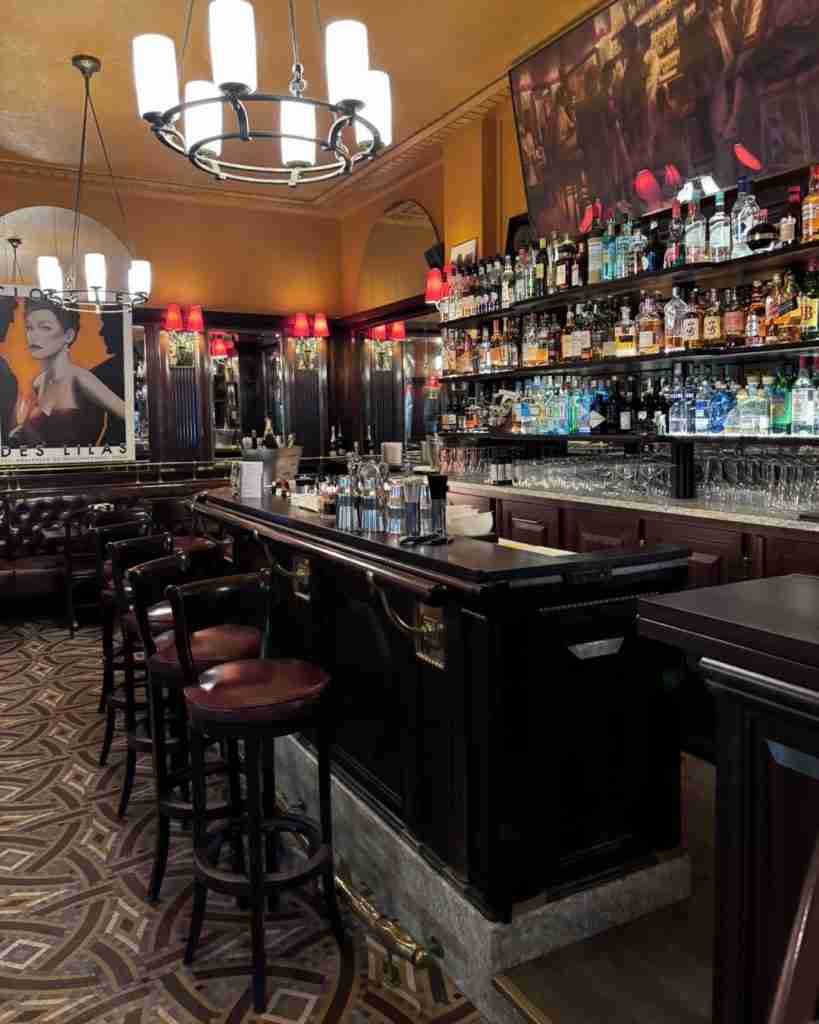
Even though the current decor isn’t the one that was in place in the early 20th century, the nostalgia factor remains strong at La Closerie, whose solid French brasserie fare is reputed as solid, if not exceptional. Come for a drink in the lush enclosed garden, or sit at the bar and pretend you’re G. Scott Fitzgerald, agonizing over syntax in a handwritten draft.
- Address: 171 Bd du Montparnasse, 75006 (6th arrondissement)
- Metro: Port Royal (RER) is the closest station, or get off at Montparnasse or Vavin metro stations and walk
- Tel: +33 (0) 1 40 51 34 50
- Visit the official website
Post-Dinner Drinks: Visit a Famous Jazz Bar in a 16th-Century Cellar (With Revolutionary Ties)
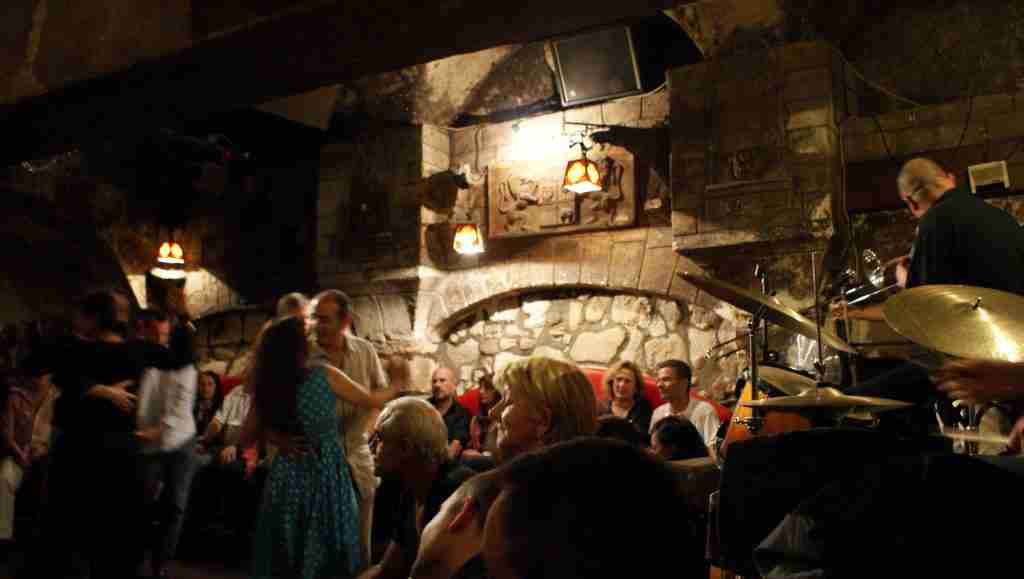
Le Caveau de la Huchette is probably Paris’ most famous jazz club– or at least among those in continuous operation. It also happens to be nestled in a genuine 16th-century cellar that, at least according to legend, has served as a meeting place for members of the Knights Templar and Rosicrucian masonic cults, as well as notorious French revolutionary figures like Danton and Robespierre.
Located just across from Notre-Dame Cathedral and just a block or two from the legendary Shakespeare & Company bookshop, the bar as we now know it opened in 1946, just a year after the end of World War II. It has seen jazz legends from Sidney Bechet to Lionel Hampton and Count Basie perform on its intimate stage.
But before that, according to the bar itself, it served as a secret masonic lodge with hidden, underground access tunnels. And during the French Revolution of 1789, it was known as the “Caveau de la terreur” due to its associations with ruthless leaders including Robespierre, responsible for the execution of thousands of people.
He and various henchmen reportedly set up a small, secret prison and tribunal within its walls, carrying out trials and even some executions by guillotine at the site, at least according to one credible source. Other unlucky victims were thrown into an underground well accessible from the cave.
Happily, it has moved on from this grim reputation and since become famous for the joy of jazz and dancing. Come for a post-dinner drink and show, especially in autumn and winter when a little extra dose of coziness is in order. Dancing is often the order of the evening, but be aware that many patrons like to show off their mad “be-bopping” skills!
- Address: 5, rue de la Huchette, 75005 (5th arrondissement)
- Metro: Cluny La Sorbonne (line 10)
- Tel: +33 (0) 1 43 26 65 05
- Visit the website for current and forthcoming shows
Like This? Pin & Share

Courtney Traub is the Founder and Editor of Paris Unlocked. She’s a longtime Paris resident who now divides her time (as well as she can manage) between the French capital and Norwich, UK. Co-author of the 2012 Michelin Green Guide to Northern France & the Paris Region, she has been interviewed as an expert on Paris and France by the BBC, Australian Broadcasting Corporation, Le Figaro, Matador Network and other publications. Courtney has also written and reported stories for media outlets including Radio France Internationale, The Christian Science Monitor, Women’s Wear Daily and The Associated Press. In addition to going down various rabbit holes of curiosity when it comes to French culture, history, food and art, Courtney is a scholar of literature and cultural history whose essays and reviews have appeared in various forums.
