
Last Updated on November 25, 2026
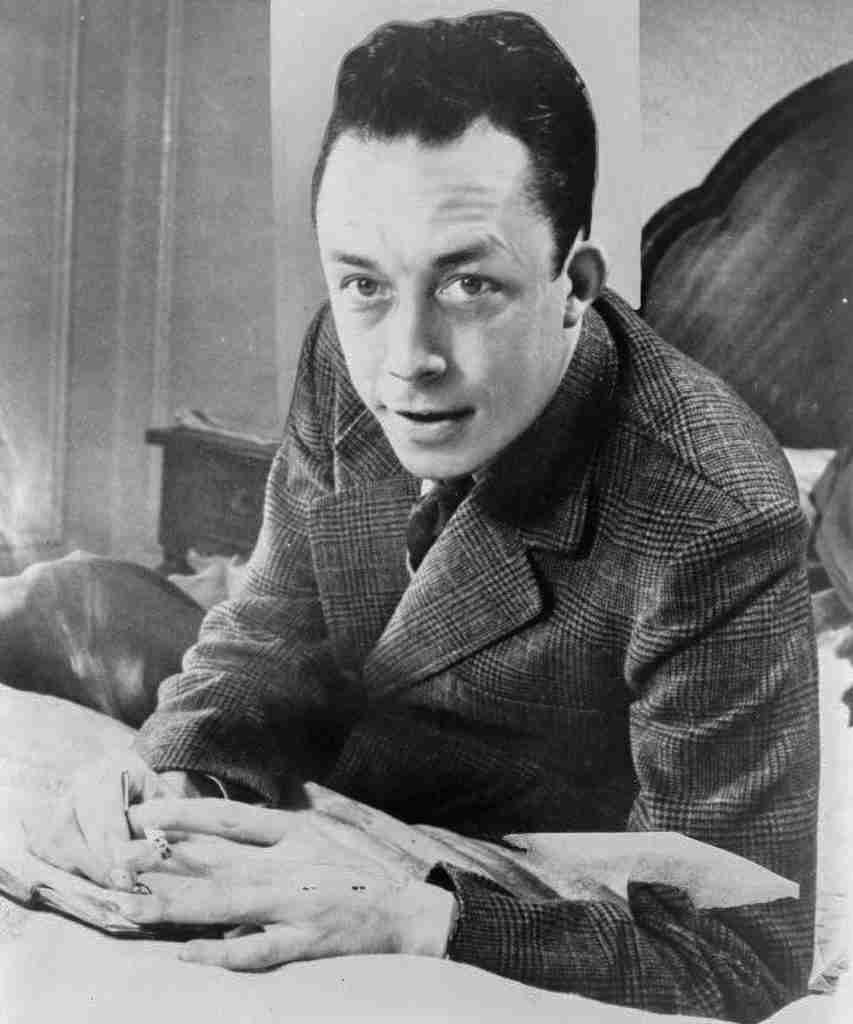
“This World of Poverty and Light”
In this first of two episodes on the Nobel Prize-winning French novelist & essayist Albert Camus, we take a deep look at the writer’s’ early life in colonial Algeria. We explore how Camus, who grew up in a working-class district in Algiers, went from a childhood spent in near-silence to becoming passionate about language, literature and human experience. We’ll start to explore some of the urgent ethical questions and principles that come up again and again in Camus’ writings: namely, how to deal with the absurd nature of human existence, and attempt to make it meaningful even in the face of an indifferent universe? Is suicide a reasonable option? What does freedom mean and look like? Is indiscriminate violence, including in the context of a social or political revolution, ever justified? And what’s the difference between a rebel and a revolutionary?
We’ll talk about what drove Camus to write in the first place, and how a childhood spent in semi-silence among illiterate family members in colonial Algeria shaped some of his key ideas and even aspects of his style– especially his focus on the body, and on sensual experience in the world – as a key to human meaning, and even happiness.
We’ll try to better understand Camus as a writer from Algeria, if not an Algerian, whose writings and aesthetic sensibilities are deeply infused with the country’s landscapes and colonial history. This is true even though Camus was rarely an accurate or deep observer of colonial realities and violences, and was particularly bad at giving true dimensionality to characters he named as “Arabs” in his fiction.
Listen to the episode on your favorite podcast player
I open the episode with one of French literature’s most notorious fallings-out: one that saw Camus and his longtime friend Jean-Paul Sartre exchange bitter words in a journal managed by Sartre, ultimately leading to the end of their friendship.
I wanted to open our two episodes on Camus with this notorious feud because it underlines something crucial about the writer’s life, work, and legacy. From his early life in colonial Algeria to his later days as a Nobel prize-winning novelist and essayist, he was often critiqued, or even unpopular, for his refusal to conform to the orthodoxies of the political left.
Observing the ruins that Europe and much of the world had been left in due to absolutist ideas promoted during World War II, Camus attempted to formulate what he called a “pensée de midi”– or thought of the middle-ground. This philosophy was inspired by what he saw, rightly or not, as essential to the Mediterranean culture he associated himself with.
Absolutist ideas repelled him, whether from the left or right, because he saw in them dangerous seeds of totalitarianism. Not incidentally, Hannah Arendt, the exiled German philosopher famous for her work on the origins of totalitarianism, was a longstanding ally and defender of Camus on these points.
The “pensée de midi” rejects ideological certainty and the impulse to destroy the reigning order through violent revolutionary action. It instead favors rebellion: for Camus, this is a creative, rather than a destructive, force that exists in a state of perpetual tension with the status quo, and re-emerges after periods of extremism and zealotry. As he says in The Rebel: [quote]
“When revolution in the name of power and of history becomes that immoderate and mechanical murderer, a new rebellion is consecrated in the name of moderation and of life.”

Over the course of the next hour and a bit, we’ll also dispel some common myths about the writer. For one, Camus has been so persistently associated with Meursault, the coldly indifferent, mildly sociopathic protagonist of The Stranger, that people fail to realize that its author was in fact deeply humanist.
He was known among friends, colleagues and family for his warmth, exuberance and generosity, and he considered care for other human beings to be a critical ethical principle. In an early journal entry, he said “L’absurdité regne, et l’amour nous en sauve”– absurdity reigns, and love saves us from it.
This is a far cry from Meursault’s claim that love doesn’t “mean anything”.
Show notes
Note: Translations of original French quotes in this episode are all by Courtney Traub, unless otherwise specified. All images displayed in the show notes are out of copyright and in the public domain.
This episode was co-written by me, Courtney Traub, and by Brendan Whalen. He is also the Producer for this season, co-edited the script, and voiced the part of Albert Camus. The episode was narrated and edited by me. Additional sound editing was from Engin Hassan of Edit Fade Warp. Artwork for the French Culture podcast is by Mateeya.
If you liked this episode, please follow The French Culture Podcast, and share it as widely as you can. You can also rate the podcast on Spotify or wherever you get your podcasts, to help us find a wider audience.
Follow & listen on Spotify, Rss.com, Apple Music, or Substack
And as I mention at the beginning of the episode, you can also lend your precious support to both the French Culture Podcast and to our sister website and newsletter, Paris Unlocked, by buying us a coffee– or even better, becoming a paid subscriber on Substack. By unlocking our “Master Key” subscription, you’ll get unlimited access to a large archive of Paris and France-related news stories, reviews, audio stories, essays and travel tips, as well as personalized travel advice from me– as well as bonus episodes and early-release materials from The French Culture Podcast.

Watch this episode on YouTube
Music credits (all music clips are in the public domain)
Intro and outro: Music by Trygve Larsen from Pixabay (“Erik Satie’s Gnossienne 1 – Classical Remix Piano and Sax”)
Music in order of use throughout episode:
- Sound Effect by u_Artemisxl from Pixabay (“Jazz Café Crowd”
- Music by Mircea Iancu from Pixabay (“Smoked Glass Keys (piano dark jazz”)
- Music by omar sahel from Pixabay (“Djovan – Moroccan Desert Prayer”)
- Music by Konstantin Nestsiarovich from Pixabay (“Unsolved Mystery – ASMR Noir Jazz”)
- Music by Mircea Iancu from Pixabay (“Guitar Romantic Jazz””
- Music by Konstantin Nestsiarovich from Pixabay (“Crime scene investigation ASMR Noir Jazz”)
- Music by Umasha Pros from Pixabay (“Battlefield Elegy”)
Sources for this episode
For this episode, we consulted a variety of print and online primary sources, including books, newspaper articles, blogs, podcast episodes, documentaries, audio clips and archival documents. They are presented in relative order of importance and/or order in which their information appears in the episode, rather than in alphabetical order.
Primary sources /Albert Camus
- Camus, Albert. The Stranger. Translated from the French by Matthew Ward. Vintage International, 1989 (first published in French as L’Etranger in 1942 by Gallimard).
- Camus, Albert. The Outsider (UK translation of L’Etranger). Translated from the French by Joseph Laredo. Penguin, 1982.
- Camus, Albert. La Peste. Gallimard, 1947.
- Camus, Albert. The Plague. Translated from the French by Stuart Gilbert. Vintage, 1948.
- Camus, Albert. La Chute (The Fall). Gallimard, 1956.
- Camus, Albert. Personal Writings. Translated from the French by Ellen Conroy Kennedy and Justin O’Brien. Foreword by Alice Kaplan. Penguin, 1968 (republished by Vintage in 2020).
- Camus, Albert. Le Mythe de Sisyphe. Folio Essais (n. 11), Gallimard, 1985 (first published by Gallimard in 1942).
- Camus, Albert. The First Man (Le Premier Homme). Translated from the French by David Hapgood. Vintage International, 1996/1995, Knopf (first published in French by Gallimard, 1994).
- Camus, Albert. The Rebel (L’homme révolté). Translated from the French by Anthony Bower. Penguin Books, 2013 (First published by Gallimard in 1951).
- Camus, Albert. Carnets – Volume 1 (May 1935–February 1942) (Journal, Vol. 1).
Print secondary sources
- Olivier Todd, Albert Camus: Une Vie (Gallimard, 1996)
- Olivier Todd, Albert Camus: A Life (Vintage, 1998).
- Robert Saretsky, A Life Worth Living: Albert Camus and the Quest for Meaning (The Belknap Press of Harvard University Press, 2013).
- Alice Kaplan, Looking for The Stranger: Albert Camus and the Life of a Literary Classic (University of Chicago Press, 2018).
- Sarah Bakewell, At the Existentialist Cafe (Vintage, 2016).
Online sources
- “Albert Camus”. (Brittanica). Available at: https://www.britannica.com/biography/Albert-Camus/Legacy (Accessed 20 November 2026).
- “Camus Biography”. Camus Society. Available at: https://www.camus-society.com/camus-bio (Accessed 20 November 2026).
- “La Rupture Avec Sartre”, Le Monde, Hors-Séries Camus, Septembre-Novembre 2013. Archived at Palimpsestes.fr. Available at: http://palimpsestes.fr/textes_divers/c/camus/Camus-Rupture-avec-Sartre.pdf (Accessed 20 November 2026).
- “Sartre Vs Camus: The Letter That Broke up a Friendship”. Intellectuals and the Media, University of Bristol (exhibition post). 24 November 2024. Available at: https://intellectualsandthemedia.org/2024/11/25/sartre-vs-camus-the-letter-that-broke-up-a-friendship/ (Accessed 20 November 2026).
- De la Baume, Maia. “A Letter From Camus to Sartre, Before They Were Enemies. The New York Times, 26 November 2014. Available at: https://archive.nytimes.com/artsbeat.blogs.nytimes.com/2014/11/26/a-letter-from-camus-to-sartre-before-they-were-enemies/ (Accessed 20 November 2026).
- “Albert Camus”. Stanford Dictionary of Philosophy. Available at: https://plato.stanford.edu/entries/camus/#ParCamAbs (Accessed 20 November 2026).
- Stone, Greg. “Why Camus Was Not an Existentialist”. Philosophy Now. Available at: https://philosophynow.org/issues/115/Why_Camus_Was_Not_An_Existentialist (Accessed 20 November 2026).
- Kavenna, Joanna. “Inside the Outsider. The Complete Notebooks” (Book review of Camus’ published notebooks). Literary Review, December 2025. Available at: https://literaryreview.co.uk/inside-the-outsider (Accessed 20 November 2026).
- “Le Mythe de Camus” (Radio France), podcast (4 episodes). Available at: https://www.radiofrance.fr/franceculture/podcasts/serie-le-mythe-de-camus (Accessed 20 November 2026).
- “Camus, Vivre Malgré Tout” (podcast series, “Apprendre a Mourir”) , France Culture. Available at: https://www.radiofrance.fr/franceculture/podcasts/avec-philosophie/camus-vivre-malgre-tout-7743021 (Accessed 20 November 2026).
- “Camus, La Pensée de Midi” (podcast series, 4 episodes). France Culture. Available at: https://www.radiofrance.fr/franceculture/podcasts/serie-albert-camus-la-pensee-de-midi (Accessed 20 November 2026).
- “Camus”. In Our Time (podcast episode). BBC Sounds, 3 January 2008. Available at: https://www.bbc.co.uk/sounds/play/b008kmqp (Accessed 20 November 2026).
- Albert Camus dans L’Alger Républicain (online newspaper archive materials). BNF/Gallica. Available at: https://gallica.bnf.fr/selections/fr/html/albert-camus-dans-alger-republicain (Accessed 20 November 2026). See, specifically, this archival page: https://gallica.bnf.fr/ark:/12148/bd6t5816742/f8
- Aciman, Albert Andre. “The First Man by Albert Camus” (book review). Commentary, March 1996. Available at: https://www.commentary.org/articles/andre-aciman/the-first-man-by-albert-camus/?__cf_chl_tk=YmcjwQKRZAPC5vtN.Q6FAkAzim_D05i8rhtUnVRD8sg-1781540850-1.0.1.1-pVgHBPNL_Oi4t77kr8Xe1FK7scKmj4f.cxqpvD5rVXc (Accessed 20 November 2026).
- Demissie, Fassil. “Review: Building the Colonial Edifices in Algiers”, Social Identities, Vol. 7, No. 1, 2001. Available at: https://www.academia.edu/10995007/Building_the_Colonial_Edific_in_Algiers (Accessed 20 November 2026).
- “Alger : voyage dans le temps de 1830 au 1939” (YouTube video, mahdiahistory3d). Available at: https://www.youtube.com/watch?v=_AMs9yMeAaE (Accessed 20 November 2026).
- De Saint Sauveur, Charles. “Les Tendres Lettres d’Albert Camus a son ancien instituteur”, Le Parisien, 25 Octobre 2020. Available at: https://www.leparisien.fr/politique/cher-m-germain-les-tendres-lettres-d-albert-camus-a-son-ancien-instituteur-25-10-2020-8404856.php (Accessed 20 November 2026).
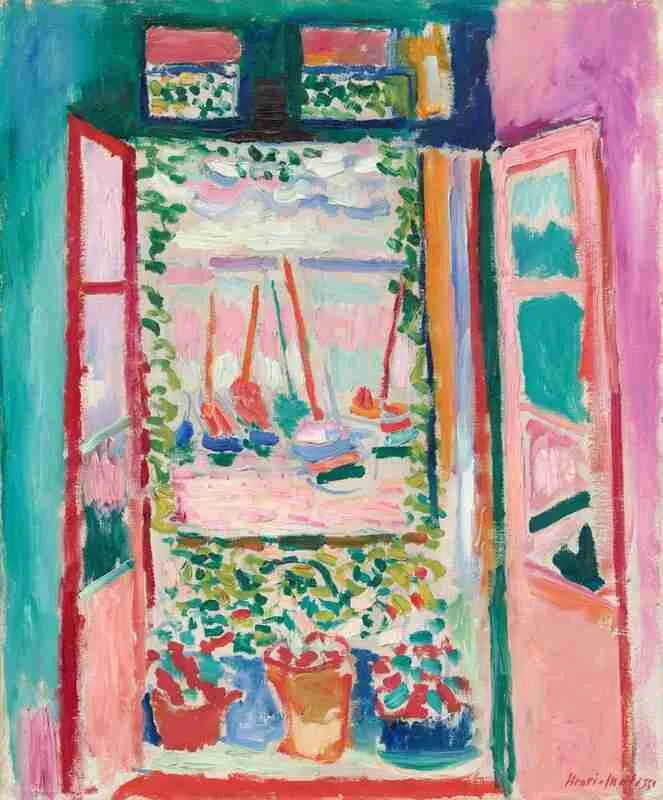
The French Culture Podcast: Season 1, Episode 2 – The Radically Colorful World of Henri Matisse

The French Culture Podcast: Season 1, Episode 3 – Edith Piaf, Part 1
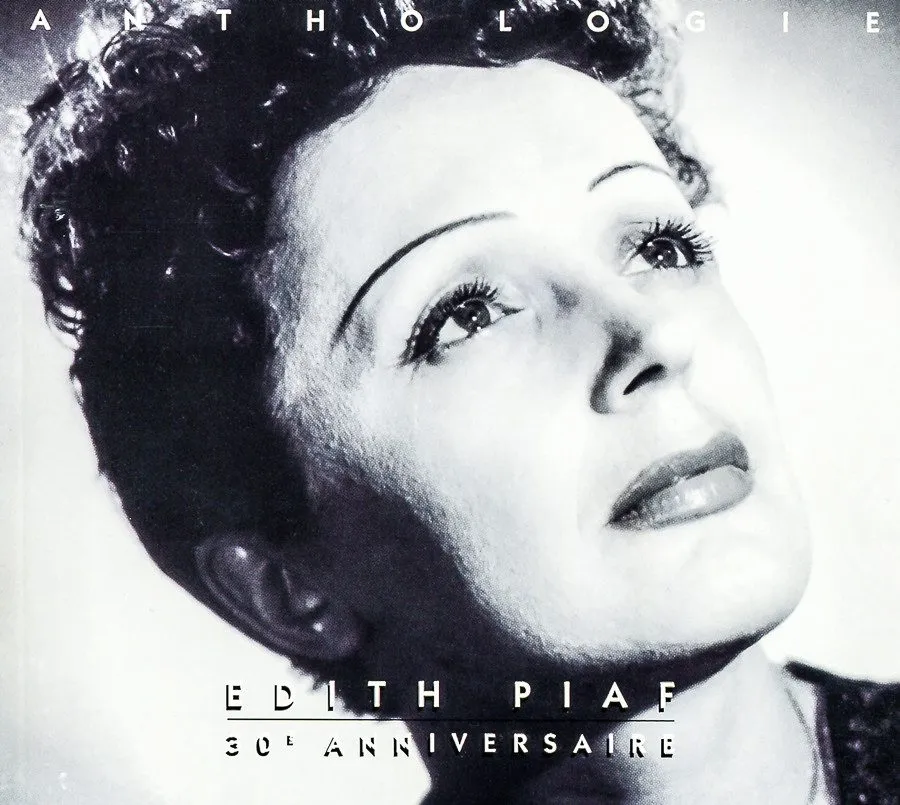
The French Culture Podcast: Season 1, Episode 4 – Edith Piaf, Part 2

The French Culture Podcast: Season 1, Episode 5 – Josephine Baker

Courtney Traub is the Founder and Editor of Paris Unlocked. She’s a longtime Paris resident who now divides her time (as well as she can manage) between the French capital and Norwich, UK. Co-author of the 2012 Michelin Green Guide to Northern France & the Paris Region, she has been interviewed as an expert on Paris and France by the BBC, Australian Broadcasting Corporation, Le Figaro, Matador Network and other publications. Courtney has also written and reported stories for media outlets including Radio France Internationale, The Christian Science Monitor, Women’s Wear Daily and The Associated Press. In addition to going down various rabbit holes of curiosity when it comes to French culture, history, food and art, Courtney is a scholar of literature and cultural history whose essays and reviews have appeared in various forums.
